The idea comes before the garment
A designer treats the collection as an idea rather than a product — the starting point is a concept, a question, or a provocation, and the clothes exist to argue it. This is the test that separates avant-garde practice from work that is merely unusual: does the collection illustrate a thought, or does it exist to be sold and worn? The term "avant-garde" itself originates outside fashion entirely, as a French military phrase meaning "advance guard," later adopted by early twentieth-century art movements — Cubism, Futurism, Dada — to describe work that broke from academic convention before the wider culture had caught up. Fashion borrowed the word for the same reason: designers using it position their work as arriving ahead of, rather than in response to, market taste, a lineage discussed in The Concept of Avant-Garde as a Creative Fashion Design.
Once the concept is set, standard fabrics and cuts are replaced with experimental materials and deconstruction. A seam might be left raw and visible rather than finished, a lining turned to the outside, a garment built from bonded synthetics or paper rather than woven cloth. Deconstruction as a working method — taking the garment apart to expose how it is made — is most closely associated with Martin Margiela, whose refusal to conform to conventional design logic is examined in The Elusive Designer's Claim To Avant-Garde Fame.
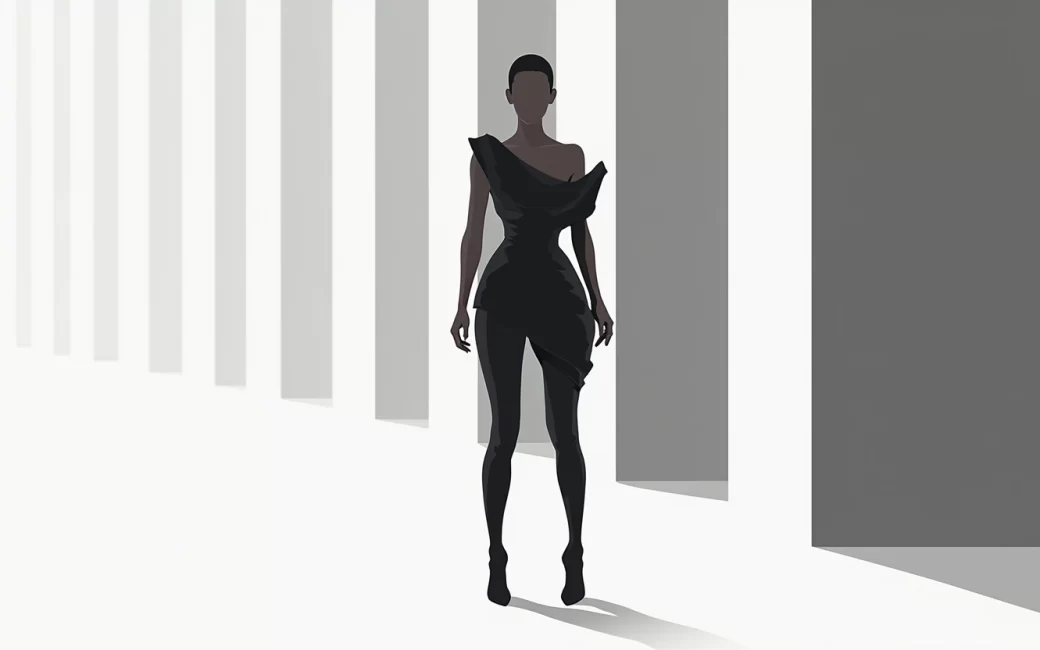
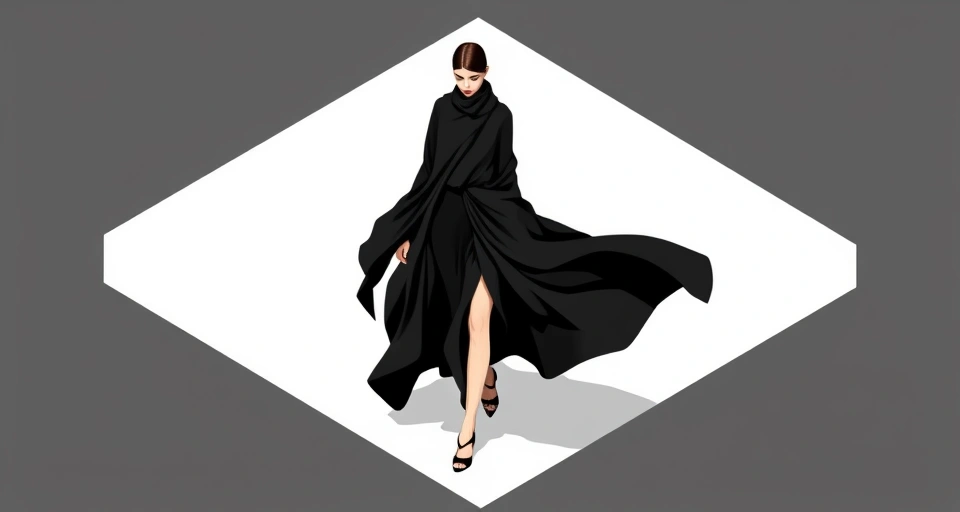
The garment that results takes on an unconventional, sculptural silhouette: exaggerated shoulders, asymmetric hemlines, volume where the body has none, padding that distorts rather than flatters. The silhouette is not a variation on a fitted line — it is often a rejection of the body's outline altogether, a point discussed at MODERN AVANT-GARDE.
Finally, the runway show stages that silhouette as the argument, not the sales pitch. Lighting, music, casting and pace are constructed to make the audience read the collection's idea, not to preview next season's rack. Together these four elements — concept first, experimental material, distorted silhouette, staged presentation — give a reader a repeatable way to call a designer avant-garde rather than simply "unusual": a collection needs all four working together, consistently, across seasons, not one shock look in an otherwise commercial line.
What separates Yamamoto, Comme des Garçons and McQueen from mainstream labels
The separation shows up in silhouette, material choice and show staging rather than in price or fame. Mainstream designers vary a fitted silhouette season to season; avant-garde designers treat the silhouette itself as the site of experimentation, so the differences are structural rather than decorative.
| Designer/House | Signature silhouette | Material or technique | Show/staging approach |
|---|---|---|---|
| Yohji Yamamoto | Draped, oversized, predominantly black garments | Loose construction that obscures the body's line | Minimal, sombre staging that foregrounds movement of fabric |
| Comme des Garçons | Asymmetric, padded, body-distorting shapes | Conceptual pattern-cutting that questions where a garment "should" sit on the body | Runway as installation, often disorienting by design |
| Alexander McQueen | Sculptural tailoring, sharp structural shapes | Precision cutting fused with theatrical embellishment | Elaborate narrative shows treated as performance art |
Each designer's consistent aesthetic identifies them across seasons even when the specific garments change — Yamamoto's draping and near-exclusive use of black, Comme des Garçons's conceptual approach to cut, and McQueen's fusion of tailoring precision with theatrical staging are cited repeatedly as core reference points for the term "avant-garde" in fashion writing, including 10 of Fashion's Most Avant-Garde Designers and Avant-Garde Fashion: Meaning, History & Modern Trends.
It's worth separating the house name from the person behind it here. Comme des Garçons is a label, not a designer; the designer is Rei Kawakubo, who founded the house and has directed its conceptual direction since. Brand and founder are frequently used interchangeably in casual writing, but they aren't the same thing — a house can outlive, or run parallel projects beyond, the single designer who defined it, the way Yamamoto and McQueen's eponymous labels are tied directly to their founders while Comme des Garçons operates as a broader umbrella under Kawakubo's direction.
It's also worth distinguishing "famous fashion designer" from "avant-garde fashion designer." Fame in fashion often tracks commercial reach — ready-to-wear volume, licensing, red-carpet visibility — while the avant-garde distinction tracks conceptual intent regardless of commercial scale. A designer can be famous without working in an avant-garde mode, and an avant-garde designer's name can circulate mainly within fashion criticism and academic writing rather than general celebrity coverage. The four elements from the previous section — concept, material experimentation, silhouette distortion, staged presentation — are the filter; commercial success or media profile isn't part of the test at all.
How the runway concept becomes a purchasable garment
A show look is rarely what ships to a store. Runway pieces are frequently produced in limited runs, sometimes as single samples, built to make the concept legible under lights and in photographs rather than to survive repeated wear. What a customer eventually buys is typically a modified version — the exaggerated proportion softened slightly, the raw seam reinforced, the unwearable fastening replaced with something a person can actually close — while keeping enough of the original silhouette that the reference to the runway idea remains visible.
This translation step is the part most explanations of avant-garde fashion skip past, moving straight from "runway idea" to "cultural influence" without describing what happens on the way. In practice it runs through several stages:
- The concept is developed and shown on the runway, often in one-off or near-one-off pieces.
- Buyers and editors respond to specific looks, which signals which ideas have commercial legs.
- The design team adapts the strongest looks into a smaller, produced range — same silhouette language, more wearable construction.
- That produced range ships to select stockists, usually at a price and volume far below the runway show's visibility.
- Secondary labels and high-street designers observe the produced range and adapt its surface cues — oversized cuts, asymmetric hems, muted palettes — into garments built from ordinary fabrics at everyday prices.
That final stage is why an avant-garde silhouette can appear on a runway one season and on a high-street rail within a year or two, discussed in the context of avant-garde ideas moving into wider circulation in The Revival of the Avant-Garde.
Avant-garde silhouettes are largely unwearable for daily use — and what happens next
Most avant-garde silhouettes are impractical for ordinary days: they restrict movement, obscure vision, or use materials that don't hold up to being sat in, walked in or washed. That impracticality isn't a design failure — it's the point, since the garment is built to make an argument rather than get someone through a commute.
Houses and imitators translate those shapes into layered, oversized everyday pieces that keep the visual cues without the runway garment's constraints — a wide shoulder becomes an oversized coat cut from washable wool rather than bonded resin; an asymmetric hem becomes a hoodie panel rather than a fused structural shape. The result is what's now generally called avant-garde streetwear, which keeps volume, asymmetry and a muted or monochrome palette while restoring the wearability the original runway piece deliberately gave up, a category profiled in Best of Avant Garde Streetwear.
For anyone wanting the aesthetic without runway-level pieces, that streetwear layer is the accessible entry point: oversized silhouettes, deconstructed detailing and a restrained palette, produced in standard fabrics at production volumes that make them findable through ordinary retail rather than through auction houses or archive dealers. It keeps the visual grammar established by houses like Yamamoto, Comme des Garçons and McQueen legible on the street, several steps removed from the concept that originated it, but still recognisably descended from it.
Start by tracing one house's output across two or three consecutive seasons — the silhouette, the materials, the staging — and see whether the same idea recurs in a modified form. That habit does more to identify avant-garde work than any single collection ever will.