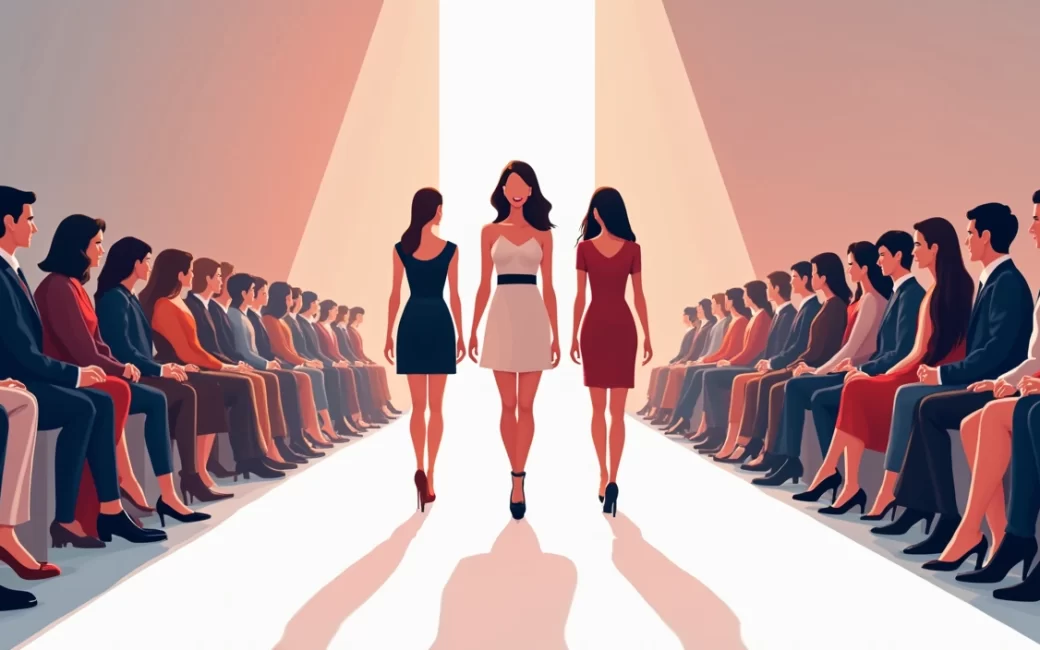
Designers present a collection for a coming season on the runway
A trend does not begin on the street; it begins on a runway calendar. Designers present ready-to-wear collections for a coming season roughly six months before that season's clothes reach shop floors, a lag that structures the entire industry, as Fashion describes in its account of how the system moves from designer to manufacturer to retailer to consumer. Spring/Summer collections are shown the preceding autumn, and Autumn/Winter collections are shown the preceding late winter or spring, so the gap between a look walking down a runway and a version of it hanging in a shop is where most of the trend cycle actually happens.
From there the pattern repeats in a fixed order:
- Media and buyers single out recurring elements — a silhouette, a colour, a fabric treatment — across multiple designers' collections in the same season, which is how outlets like Vogue and Harper's Bazaar construct their seasonal trend coverage.
- Brands with wholesale and manufacturing capacity translate the expensive original into a lower-cost, more producible version — different fabric, simplified construction, a fraction of the price.
- That version is placed in stores and online in time for the actual calendar season it was designed for.
- Consumers buy it, wear it, and photograph it, which is the step that confirms a trend rather than merely predicting one — a distinction Audaces draws in its explanation of how trends emerge from runway to retail.
For a reader, this sequencing has a practical use. Buying during the runway season itself means paying designer prices for a piece that has not yet been validated by wider adoption. Waiting for the high-street version means paying less but wearing something that is already partway through its lifecycle. Neither is wrong — they are different points on the same curve, and knowing which one you're standing on is the only way to buy on purpose rather than by accident.
A trend peaks and saturates the market
A trend peaks when the version originally seen on a handful of runways has been copied at every price point, and saturation is the point at which its most recognisable details stop signalling anything new. This is the mechanical reverse of the first cycle: what took roughly six months to build from runway to rail can exhaust itself much faster once every price tier carries the same silhouette or trim.
The tell is usually in the detail rather than the garment. A dropped waistband, a specific lapel width, an unusual hem length — these are what date fastest, because they are legible at a glance. A plain, well-constructed coat rarely dates the same way, because there is nothing distinctive enough in it to be pinned to a season.
This is also the honest answer to "what is out of style for 2026" — it is less a fixed list and more a mechanism, because any list written today is itself a snapshot that will date the way the trends inside it do. The pieces most likely to read as dated are the ones with the most specific, most photographed detail: the exaggerated version of a shape, the loudest colourway, the accessory that appeared on every account at once. Basics with no strong seasonal marker do not become "out of style" in the same sense, because they were never legible as a single season's trend to begin with.
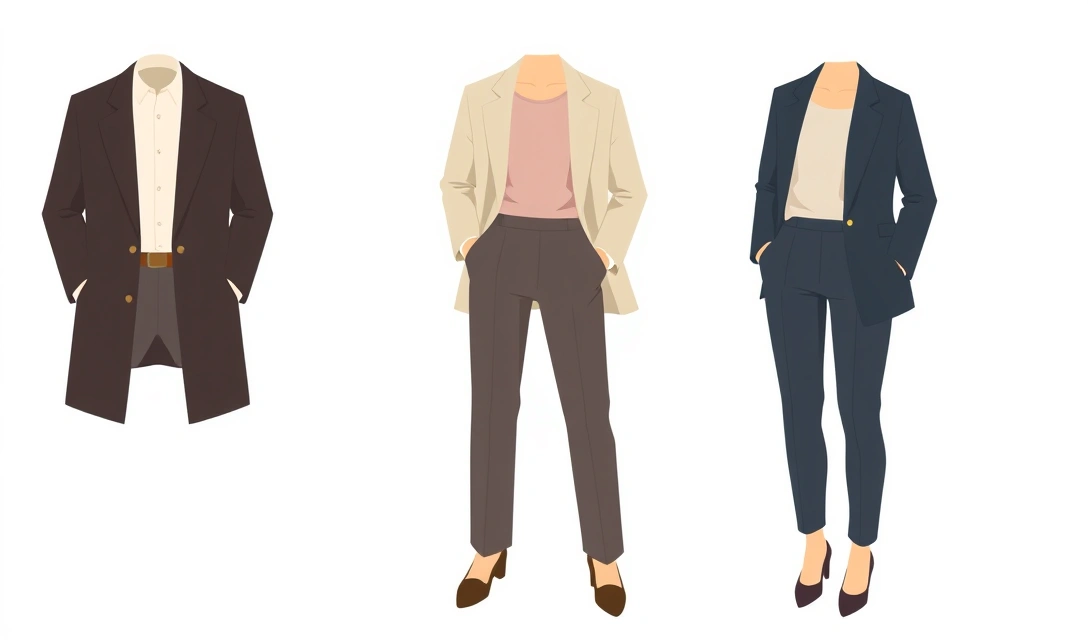
One practical response to this cycle is to keep the everyday wardrobe small and deliberate enough that trend pieces stay a minority of it, rather than becoming the default. A version of this, popularly known as the 3-3-3 rule, involves choosing a limited number of tops, bottoms and outer layers to rotate through for a stretch of time and noting which combinations get repeated versus which sit unworn — the unworn ones tend to be the pieces bought for a single trend moment rather than for ongoing use. Building the bulk of a wardrobe from pieces that survive several rounds of that kind of rotation, and limiting trend purchases to a small number of pieces per season, reduces how much of a wardrobe is exposed to the peak-and-saturation cycle at any one time.
Reader wants to look expensive rather than trendy
Looking expensive and looking current are not the same project, and conflating them is what makes "wealthy" style advice so often just trend advice in disguise. The cues that read as expensive are mechanical rather than seasonal: fabric behaviour, fit precision, and coherence across an outfit, not the presence of a logo or the newest silhouette.
Fabric is the first mechanism. Natural fibres and tightly woven or well-finished synthetics drape and hold shape differently from cheap, loosely woven material — they don't cling, wrinkle in the wrong places, or pill at points of friction the way lower-grade fabric does. This is a production and materials question before it's a style question, which is why it sits outside seasonal trend coverage entirely: a fabric either has structure and finish or it doesn't, regardless of what silhouette it's cut into this year.
Fit is the second, and arguably the stronger signal. A garment that fits the wearer's actual proportions — sleeve length ending at the wrist bone, trouser break sitting where intended, shoulder seams aligned with the shoulder itself — reads as considered regardless of the item's price or brand. Ill-fitting expensive clothes read as sloppy; well-fitted inexpensive clothes read as put-together. Tailoring adjustments (a hem, a taken-in waist, a shortened sleeve) are usually a cheaper way to close this gap than buying up in price.
The third mechanism is coherence: a small, repeated set of colours and shapes across an outfit reads as more intentional than an outfit assembled from unrelated trend pieces bought at different moments for different reasons. This is effectively the same logic as rotating a limited wardrobe, applied to how a single outfit is built rather than to how a week is dressed — a limited, repeatable formula produces a more consistent result than chasing whatever is newest each week.
| Mechanism | What it looks like | What undermines it |
|---|---|---|
| Fabric | Structured drape, clean finish, minimal pilling | Loosely woven, shiny synthetic, visible pilling |
| Fit | Seams and hems align to the wearer's own proportions | Off-the-rack sizing worn unaltered |
| Coherence | Repeated palette and shape across the outfit | Unrelated trend pieces combined without a formula |
None of these three depend on an item being new, which is exactly why they're a more durable answer to "how to look wealthy" than any list of current trends could be.
Fashion trend
A fashion trend is a style — a silhouette, colour, fabric or way of styling an outfit — that is widely adopted for a limited period before giving way to the next one. It is the unit that every other layer of the system in this piece operates on, and its lifespan is what the runway-to-retail lag, the peak-and-saturation pattern, and the limited-rotation approach above are all responses to.
Outfit
An outfit is the assembled combination in which a trend is actually worn, and it's the level at which coherence — or its absence — becomes visible. A single trend item can look considered or careless depending entirely on what it's combined with, which is why the "look expensive" mechanism above operates at outfit level rather than at the level of any single garment.
Fashion brand
A fashion brand is the commercial producer that turns a runway idea into something buyable — sourcing fabric, setting a price point, and deciding how closely to follow the original design versus simplifying it for cost and speed. This is the step where materials and production decisions, largely invisible on editorial trend coverage, determine what a trend actually costs to make and therefore what it costs to buy.
Personal style
Personal style is an individual's durable way of dressing — a set of preferences in cut, colour and proportion that persists across seasons rather than resetting each time the runway calendar turns over. It's the counterweight to trend-chasing: a wardrobe built primarily around personal style absorbs new trends selectively, rather than being rebuilt by them.
Runway show
A runway show is the presentation, on a fixed seasonal calendar, where a designer's collection for an upcoming season is shown to press and buyers before any of it reaches a shop. It's the first point in the entire cycle described above — everything from media coverage to high-street copies to the eventual saturation and dating of a look traces back to what happened at this stage, months earlier.
Fashion designer
A fashion designer is the originator of the silhouettes, cuts and collections that seed a trend in the first place — the person or house whose seasonal show is the reference point that media, wholesale buyers and mass-market manufacturers all respond to. Everything downstream, from the version sold at high-street price points to the version worn and photographed by consumers, is a copy or an adaptation of a decision made at this originating stage.
Track which pieces from your own current rotation get repeated next week, and rebuild from there rather than from whatever is newest.