Designers present a collection for a coming season on the runway
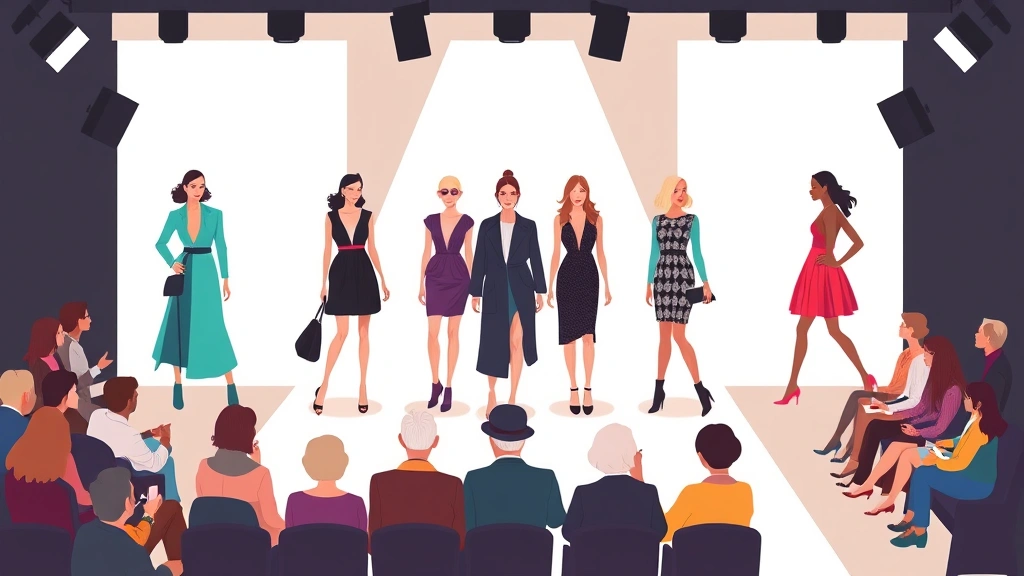
A trend does not begin on a rack; it begins at a runway show, months before any shopper sees the garment in a store. Designers present collections for a coming season — Spring/Summer or Autumn/Winter — and it is only afterward that the wider industry decides which pieces from that show matter.
The path from runway to wardrobe runs in a fixed order:
- Designers present a collection for a coming season on the runway, tied to a fixed show calendar.
- Media and brands single out recurring silhouettes, colours and materials that repeat across multiple houses' shows that season.
- Brands produce accessible versions of those pieces at lower price points and place them in retail.
- Consumers buy and wear the look, which is what actually confirms something as a trend rather than a single designer's idea.
This is why a reader might see the same puffed sleeve or exaggerated shoulder on a magazine cover in one season and then on the high street the next — the gap between step one and step three is where the diffusion happens, not an accident of timing. For a woman assembling her own wardrobe around this cycle rather than chasing it, the practical choice is when to enter it: buying at the runway or early-editorial stage means paying designer prices for something still rare, while waiting for the high-street version means paying far less but wearing it once it is already common. Neither is wrong — they simply answer different questions, and knowing which stage a garment is in tells a shopper what she is actually paying for.
Coverage of women who have built recognisable personal style over decades — rather than following each season's single dominant look — increasingly draws on women who are themselves well past the age most fashion media targets. Profiles of bloggers and street-style subjects in their fifties, sixties and beyond are now common enough that outlets have built entire lists around them, such as this roundup of older fashion bloggers and this list of street style women over 60 photographed outside shows rather than on a runway itself.
A trend peaks and saturates the market
A trend peaks once the accessible, high-street version from step three above is widely available and worn broadly across a season — at that point it has, by definition, stopped being distinctive. What happens after saturation is that the trend's most identifiable features start to read as dated rather than current, simply because they are now attached to a specific, recent moment rather than to no moment at all.
This creates the annual question of what is going "out of style" for the coming year — a question that is usually answered with a list that itself expires within months. A more durable way to answer it is to separate two categories of clothing rather than track individual items:
| Category | Behaviour across seasons | Example type |
|---|---|---|
| Durable basics | Recur every season with only minor variation | A well-cut blazer, straight trousers, a plain coat |
| Trend pieces | Peak, saturate, then read as dated within one to two years | A specific print, an exaggerated silhouette detail, a saturated colour of the moment |
Building a wardrobe around durable basics and applying a limited-piece rule to trend items — allowing in only one or two seasonal pieces at a time rather than replacing multiple items each season — reduces exposure to the peak-and-dated cycle almost entirely. It does not eliminate trend pieces; it just contains them, so that when a specific detail becomes dated, only a small fraction of the wardrobe is affected rather than the whole thing.
Writers who profile women dressing past midlife tend to describe exactly this pattern in practice: a stable core wardrobe punctuated by a small number of current pieces, rather than a wholesale seasonal turnover. Several of the women featured in Silver Magazine's list of fashion influencers over 50 and in The Flow Space's roundup of influencers over 50 are described in terms of a recognisable signature look built up over years, with individual trend pieces layered in and out rather than the entire outfit replaced each season.
Reader wants to look expensive rather than trendy
Looking expensive and looking trendy are separate goals, and confusing them is the most common way a wardrobe budget gets spent on the wrong things. Trendiness is about timing — wearing what was recently on a runway — while looking expensive is almost entirely about fit, fabric and coherence, none of which require the newest item on the market.
The mechanism is straightforward:
- Fit is the single most visible signal — a garment that follows the actual line of the body, at the shoulder, waist and hem, reads as considered regardless of its price, while an ill-fitting expensive item reads as careless.
- Fabric shows in how a garment moves and creases — natural fibres and heavier weights hold their shape and drape in ways that synthetic, lightweight fabrics generally do not, and this is visible at a glance even to someone who couldn't name the fibre content.
- Coherence across the whole outfit — a limited, repeated palette and a consistent level of formality — reads as intentional, where a mix of unrelated pieces reads as improvised, however costly any single piece was.
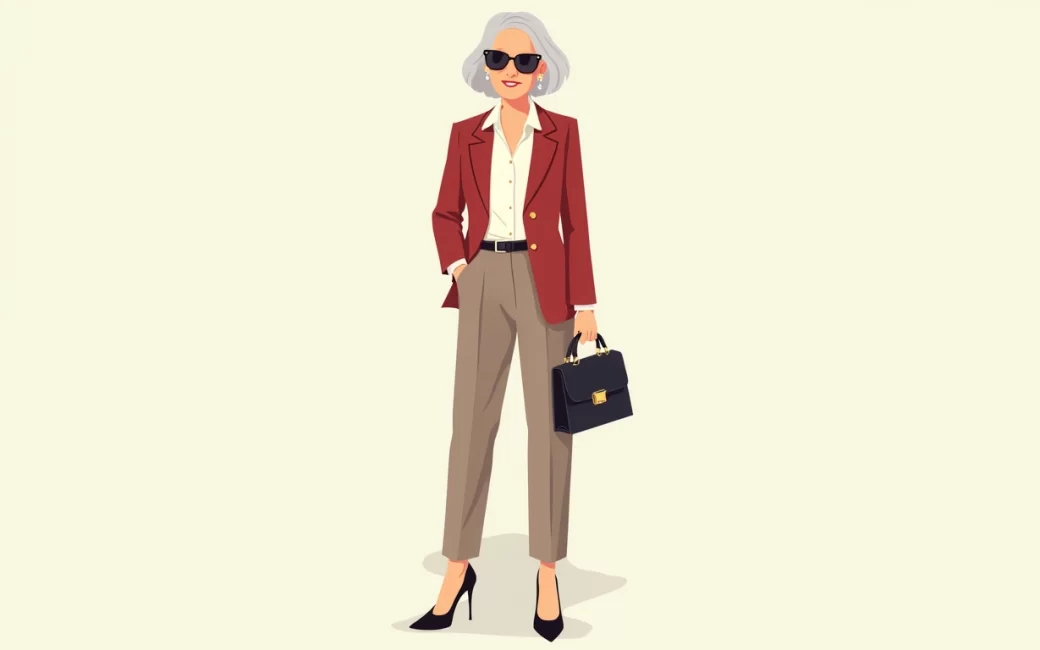
None of these three cues depends on a visible logo or on owning the newest release of anything. A blazer bought two years ago that still fits precisely and is paired with trousers in a related tone will read as more expensive than a current-season logo item worn with mismatched separates. This is also why a repeatable outfit formula — the same silhouette shape worn in different colours and fabrics — does more for perceived cost than variety does; the eye reads the repetition as a rule the wearer has set for herself, rather than as improvisation.
This is the mechanism that profiles of older women dressing well tend to describe without naming it directly: a small number of cuts worn consistently, in better fabric, rather than a wide and constantly changing rotation of cheaper pieces. Coverage of women over 60 whose personal style has become recognisable enough to build a following around, such as those featured on WhoWhatWear's list of older fashion Instagrammers and Sixty and Me's roundup of favourite fashion bloggers, tends to describe exactly this — a consistent silhouette and palette rather than a wardrobe organised around whatever is newest.
Fashion as the system trends move through
Fashion, in the broad sense, is the entire system of dress, design and industry within which any individual trend moves — the runway calendar, the media that covers it, the manufacturers that produce it and the retailers that sell it. A single trend is a temporary event inside that system; fashion itself is the ongoing structure that produces a new set of trends every season, regardless of which particular silhouette or colour is currently peaking.
Understanding this distinction matters for anyone trying to dress well rather than just fashionably, because it explains why the industry's coverage skews so heavily toward what is new. The system's commercial incentive is turnover — media needs new content each season, brands need new product to sell — which is precisely why durable personal style, the kind built over years rather than replaced each season, gets comparatively little institutional attention despite being what most readers actually want for themselves. Lists such as Elle's feature on older street style exist largely because that gap is real: the system has long been built around the assumption that its audience is young, even though a great deal of consistent spending power sits outside that assumption.
Outfit as the unit a trend is actually worn in
A trend never exists in isolation — it is only ever seen in the world as part of an outfit, the specific combination of items a person puts together on a given day. This is the level at which the durable-basics-plus-limited-trend-pieces approach described above actually gets executed: not garment by garment, but outfit by outfit.
The reason outfit is the right unit to think in, rather than individual pieces, is that coherence — the third cue in looking expensive, discussed above — is a property of the whole combination, not of any single item. A well-made blazer worn with the wrong trousers reads worse than a modestly priced blazer worn with trousers, shoes and accessories chosen together with an eye to matching formality and palette. Profiles of women with strong personal style consistently describe their outfits, not their individual pieces, as the recognisable signature — a specific way of combining a blazer with trousers, or a coat with a scarf, repeated with variation across many days, as seen in coverage such as The Flow Space's roundup of influencers over 50.
Fashion industry as what spreads a trend
The fashion industry is the commercial machinery — brands, retailers, magazines, and now individual influencers with large followings — that takes a runway idea and pushes it out to a mass audience. It is distinct from fashion in the broad sense because it is specifically the commercial system: the part that decides which trends get manufactured at scale, marketed, and stocked, and which quietly disappear after one season with no high-street version at all.
Influencers now sit inside this industry as a distribution channel in their own right, alongside traditional magazines and brand marketing — which is part of why lists of influencers over 50 and 60 have become a genre of their own, rather than a niche curiosity. The women featured in these lists are not simply subjects of admiration; they function, within the industry's own commercial logic, as a channel through which brands reach an audience the industry historically underserved, a shift visible in pieces such as Silver Magazine's list of 50-plus influencers and Inglesideonline's roundup of bloggers over 60.
Understanding the industry as a commercial system, rather than a purely creative one, is what makes the earlier advice actionable: it is precisely because the industry profits from turnover that a reader benefits from deliberately stepping outside its seasonal rhythm — building a wardrobe around fit, fabric and a repeatable outfit formula that owes nothing to which trend is currently peaking. Start there, and let the runway calendar be something to glance at occasionally rather than something to keep up with.